
Edge's News: Elon Musk has challenged Russian President Vladimir Putin to a fight...

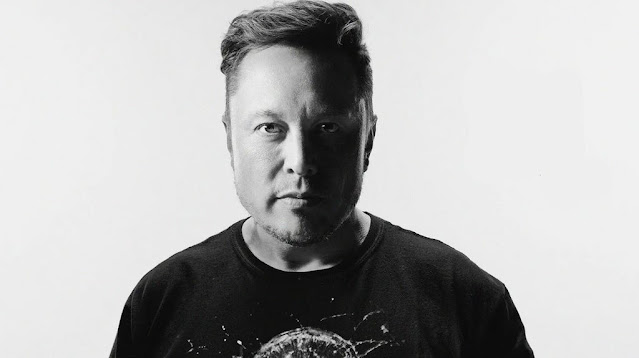
Amid escalating Russia and Ukraine conflict, SpaceX and Tesla CEO Elon Musk on Monday (March 14) has apparently challenged Russian President Vladimir Putin for single combat for Ukraine. 

Using the Russian alphabets to write Putin's name, Musk on his official Twitter handle wrote: "I hereby challenge Vladimir Putin to single combat. "Stakes are Ukraine," he added. 


In the same trail, Musk then wrote in Russian: "Do you agree to this fight?" and tagged the official Twitter account of the Kremlin. 


The tweet has gone viral in no time with people reacting and retweeting it. In the comment section, one of the Twitter users highlighted the point that the Russian president would easily win any fight. 


Musk responded, "If Putin could so easily humiliate the west, then he would accept the challenge. But he will not." 


When another user asked whether Musk thought it through before challenging Putin for single combat, Musk replied, "I am absolutely serious."


The Russia and Ukraine conflict has impacted the world and so as Musk, who said that the US electric carmaker and his rocket company SpaceX are facing significant inflationary pressure in raw materials and logistics. 


Musk in a tweet on Sunday also asked about the inflation rate outlook and said his companies "are not alone", retweeting an article saying the Ukraine-Russia conflict sent commodity prices to their highest levels since 2008. 


Russia's invasion of Ukraine has led to a surge in prices of metals used in cars - from aluminium in the bodywork to palladium in catalytic converters to the high-grade nickel in electric vehicle batteries - and customers are likely to foot the bill.


Comments

Popular posts from this blog

The FCT Minister–Soldier Standoff: A Test of Civil Authority and the Rule of Law

On November 11, 2025, Nigerians watched in disbelief as a video surfaced showing a tense confrontation between the Minister of the Federal Capital Territory, Nyesom Wike, and a group of armed soldiers who blocked his convoy from accessing a disputed piece of land in Gaduwa, Abuja. The incident, brief but dramatic, was more than a moment of political theatre. It struck at the heart of a much bigger issue — the place of the military in a democracy, and the sanctity of civilian authority under the Nigerian Constitution. The Legal Position: Who Was Right? The Minister’s Authority Under Section 302 of the 1999 Constitution and the FCT Act , the Minister of the Federal Capital Territory exercises the executive powers of the President within Abuja. That means the Minister is not just a political appointee — he represents federal executive authority . His duties include overseeing land allocation, urban planning, and the enforcement of development control through the Federal Capital T...

Nigeria: On the Right of Self-Defence and Protection of National Sovereignty

The Federal Republic of Nigeria reaffirms its unwavering commitment to the purposes and principles of the Charter of the United Nations, in particular the maintenance of international peace and security, the respect for the sovereignty and political independence of all States, and the peaceful settlement of disputes. Nigeria is a sovereign and independent nation. Our Constitution vests sovereignty in the people of Nigeria and mandates the Government to protect the territorial integrity and independence of our country. This sovereignty—recognised under international law and reaffirmed by our membership in the United Nations, the African Union, and the Economic Community of West African States (ECOWAS)—is inviolable. The Government of Nigeria has observed with grave concern recent statements and actions that amount to a threat of aggression and possible violation of our territorial integrity. We remind all States that any such threat or use of force contravenes Article 2(4) of the Ch...

Kebbi’s 3 a.m. Withdrawal Shows Why President Tinubu’s Security Reforms Can’t Wait

When Governor Nasir Idris of Kebbi State revealed that security personnel deployed to vulnerable communities were withdrawn at 3:00 a.m.—just 45 minutes before an attack—Nigerians reacted with shock, anger, and a single question that refuses to disappear: Who gave the withdrawal order? It is a fair question. It is also one that may take time, investigation, and institutional honesty to answer. But the Kebbi incident exposes a deeper truth about security management in Nigeria: our command structure is too fragmented for a country battling multi-layered threats. And this, more than anything, validates President Bola Ahmed Tinubu’s push for a centralised, technology-driven, and accountable security coordination model. Nigeria’s security agencies—military, police, DSS, civil defence, intelligence units—operate in parallel lanes with overlapping mandates. State governors, despite bearing the title “Chief Security Officer,” have no legal authority over federal forces. This incoheren...