
Edge's News: US Gun Manufacturer Remington Offers $33 Million to Settle Lawsuit of Sandy Hook Families

Earlier this month, lawyers representing the nine families of victims from the 2012 Sandy Hook Elementary School shooting claimed that, after seven years of litigation, US gun manufacturer Remington was deliberately slowing the discovery process by submitting over 18,400 unrelated emojis and images, as well as some 15,000 additional image files.

A Tuesday issuance from the legal team of both Remington Arms Co. LLC and Remington Outdoors Co. Inc. detailed that the twice-bankrupt company would be offering each family $3.66 million to "settle all claims inclusive of any fees and costs." 


Lawyers for the family have said that they will "consider the next steps in moving forward" with the trial, which accuses the weapons manufacturer of engaging in shady marketing practices that praised the qualities of their rifles - one of which was used by the 20-year-old gunman in the 2012 Newtown, Connecticut, shooting. 


The massacre left 20 children and six adults dead.  
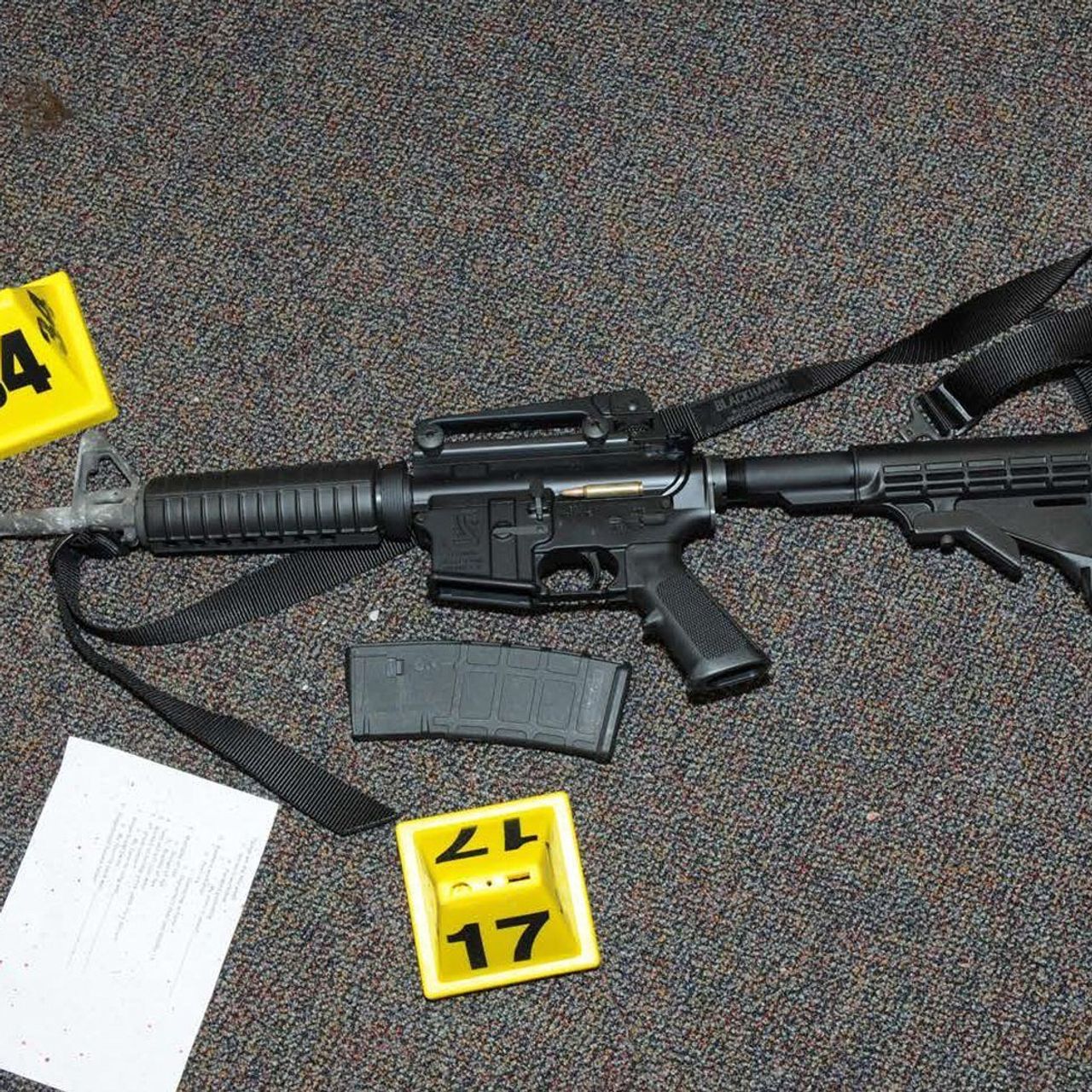

Remington Bushmaster XM15-E25 used in Sandy Hook Shootings


The offer comes weeks after lawyers representing the family filed a complaint earlier this month, accusing the manufacturer of refusing to "comply with their discovery obligations." 


"Remington has treated discovery like a game," the complaint reads. "Unwilling to have this case decided by a jury on the merits with a full record, Remington has sought delay and obfuscation at every turn." 


While the lawsuit has been active since 2014, Remington has endured two bankruptcies since then, with the latest filing resulting in an automatic, one-year stay of the court proceedings. The order was recently lifted in June. 


Remington also appealed to the Supreme Court in 2019 to reverse the Connecticut Supreme Court decision to allow the case to go to trial. However, the SCOTUS denied the case. 


Jury selection for the case is scheduled to take place in September.

Comments

Popular posts from this blog

The FCT Minister–Soldier Standoff: A Test of Civil Authority and the Rule of Law

On November 11, 2025, Nigerians watched in disbelief as a video surfaced showing a tense confrontation between the Minister of the Federal Capital Territory, Nyesom Wike, and a group of armed soldiers who blocked his convoy from accessing a disputed piece of land in Gaduwa, Abuja. The incident, brief but dramatic, was more than a moment of political theatre. It struck at the heart of a much bigger issue — the place of the military in a democracy, and the sanctity of civilian authority under the Nigerian Constitution. The Legal Position: Who Was Right? The Minister’s Authority Under Section 302 of the 1999 Constitution and the FCT Act , the Minister of the Federal Capital Territory exercises the executive powers of the President within Abuja. That means the Minister is not just a political appointee — he represents federal executive authority . His duties include overseeing land allocation, urban planning, and the enforcement of development control through the Federal Capital T...

Nigeria: On the Right of Self-Defence and Protection of National Sovereignty

The Federal Republic of Nigeria reaffirms its unwavering commitment to the purposes and principles of the Charter of the United Nations, in particular the maintenance of international peace and security, the respect for the sovereignty and political independence of all States, and the peaceful settlement of disputes. Nigeria is a sovereign and independent nation. Our Constitution vests sovereignty in the people of Nigeria and mandates the Government to protect the territorial integrity and independence of our country. This sovereignty—recognised under international law and reaffirmed by our membership in the United Nations, the African Union, and the Economic Community of West African States (ECOWAS)—is inviolable. The Government of Nigeria has observed with grave concern recent statements and actions that amount to a threat of aggression and possible violation of our territorial integrity. We remind all States that any such threat or use of force contravenes Article 2(4) of the Ch...

Kebbi’s 3 a.m. Withdrawal Shows Why President Tinubu’s Security Reforms Can’t Wait

When Governor Nasir Idris of Kebbi State revealed that security personnel deployed to vulnerable communities were withdrawn at 3:00 a.m.—just 45 minutes before an attack—Nigerians reacted with shock, anger, and a single question that refuses to disappear: Who gave the withdrawal order? It is a fair question. It is also one that may take time, investigation, and institutional honesty to answer. But the Kebbi incident exposes a deeper truth about security management in Nigeria: our command structure is too fragmented for a country battling multi-layered threats. And this, more than anything, validates President Bola Ahmed Tinubu’s push for a centralised, technology-driven, and accountable security coordination model. Nigeria’s security agencies—military, police, DSS, civil defence, intelligence units—operate in parallel lanes with overlapping mandates. State governors, despite bearing the title “Chief Security Officer,” have no legal authority over federal forces. This incoheren...